
Our solutions are designed to make energy supply and energy management more efficient, secure, and effective – even under challenging conditions. Thus, we support the management of current threat situations and create real value both in active field operations and at the interface with civilian deployments, such as protecting critical infrastructure and in crisis response.
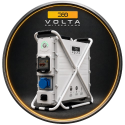
EcoVolta – 2.3KW
POWERBANK
Universal, compact portable 230V solution for silent, emission-free energy on the go.
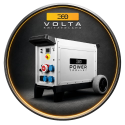
EcoVolta – 8.9KW
POWER TROLLEY
Mobile 400 Volt solution for professional applications with high power requirements.
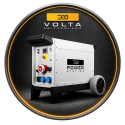
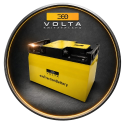
EcoVolta – 15.0KW
POWERSTATION
Scalable professional power supply for high inrush currents and long runtimes or multiple devices.
EcoVolta – 15.0KW
EVOTRACTION
Powerful battery blocks or traction batteries for electric vehicles and machinery

FlexiBatt – 2.5KW
BATTERY-BLOCK
With 2.5 kWh and a lightweight, compact design, FlexiBatt provides energy for extended field operations.

FlexiBatt – 2.5KW
BATTERY CASE
A modular 48V and 2.5 kWh ruggedized battery system for professional, off-grid use independent of the power grid.

FlexiBatt – 50KW
BATTERY SYSTEM
A UPS and energy storage system with high capacity. The system combines 5 kWh modules. Scalable up to 50 kWh.

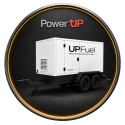
PowerUP
GENERATORS
Mobile hydrogen fuel cell generators for quiet, emission-free power in flexible applications.

PowerUP
POWER SUPPLIES
Integrable fuel cell power supplies for compact, modular hydrogen-based energy systems.
PowerUP
ELECTROLYZER
Decentralized hydrogen production for resilient, independent energy supply on site.
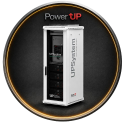
PowerUP
USV SYSTEME
Hydrogen-based UPS power systems for reliable backup power in critical applications.

PowerUP
CONTAINER SYSTEME
Containerized hydrogen power systems, solutions for scalable, resilient energy supply on site.












Vogt-CTE
Rescue
Business field for products related to rescue and operations

Vogt-CTE
Defense
Business field for products related to defense and security markets
Vogt-CTE
Energy
Business sector for products related to mobile energy supply markets

Vogt-CTE Fire Retardants
Business field for products related to fire protection and firefighting


An electrolyzer is a device that uses electric energy to split water into two gases: hydrogen and oxygen. You can think of it as a “conversion machine”: electricity becomes a storable energy carrier. This is particularly interesting because electricity (for example, from wind and solar) is not always available when needed, and it is not easily stored in large quantities for long periods.
Why is this important?
Important: Hydrogen is not an energy source, but rather an energy storage. How environmentally friendly it is largely depends on whether the electricity used comes from renewable sources.

Inside, an electrolyzer is like a kind of “sandwich” made of several layers. A single “cell” provides only a small amount of voltage. Therefore, many cells are assembled into a stack (a pile of many cells) to obtain sufficient power.
Two electrodes
Separator layer in the middle (membrane or separator)
Channels and plates
On the outside: System technology
An electrolyzer converts electricity + water into the storable energy carrier hydrogen (with oxygen as a byproduct) and is thus a crucial component in making renewable energy flexibly usable.
The power supply is the actual “engine” of the electrolyzer: electrolysis requires direct current (DC), so the power electronics convert the grid current and adjust the voltage and current to ensure the electrolyzer operates within a safe and efficient range. The current directly controls the production rate (more current means more hydrogen), while the required voltage impacts losses, which in turn affects heat generation and the stress on components. A good control system with smooth ramps during acceleration and deceleration therefore increases efficiency and lifespan.
After production, hydrogen and oxygen are usually warm and contain water vapor and fine water droplets. Therefore, the gases are first cooled, condensate is removed, and then further dried in a dryer to ensure pipelines, valves, and measuring devices operate reliably and the hydrogen meets the required quality. For storage, the hydrogen is typically compressed because it has very little volumetric energy at ambient pressure. This often involves multi-stage compression and cooling in between, and when filling into cylinders or storage tanks, pressure, flow, and temperature are monitored to ensure the final pressure is safely achieved and no unwanted heating or moisture remains in the system.

WE DELIVER INNOVATIVE ENERGY SYSTEMS
At Vogt-CTE, we provide our European trading partners access to unique innovations in the field of energy systems. Our solutions make energy supply and energy management easier, faster, safer, and more energy-efficient – all while consuming fewer resources. The products we represent are highly specialized, field-tested, and create real value: they strengthen resilient, decentralized structures and ensure operation even under demanding conditions. We do not just bring products to market; we deliver progress. Together with our partners, we ensure that these innovations reach where they are needed most: at operators of critical infrastructure, response organizations, and field users.