


















WE DELIVER ENERGY SYSTEMS

Our solutions are designed to make energy supply and energy management more efficient, secure, and effective – even under challenging conditions. Thus, we support the management of current threat situations and create real value both in active field operations and at the interface with civilian deployments, such as protecting critical infrastructure and in crisis response.

BATTERY TROLLEY SYSTEMS

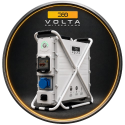
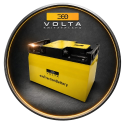
EcoVolta – 2.3KW
POWERBANK 

Universal, compact portable 230V solution for silent, emission-free energy on the go.

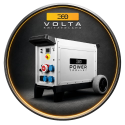
EcoVolta – 8.9KW
POWER TROLLEY
Mobile 400 Volt solution for professional applications with high power requirements.

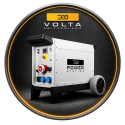
EcoVolta – 15.0KW
POWERSTATION

Scalable professional power supply for high inrush currents and long runtimes or multiple devices.

EcoVolta – 15.0KW
EVOTRACTION
Powerful battery blocks or traction batteries for electric vehicles and machinery

BATTERY CASE SYSTEMS

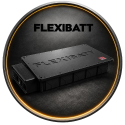
FlexiBatt – 2.5KW
BATTERY-BLOCK
With 2.5 kWh and a lightweight, compact design, FlexiBatt provides energy for extended field operations.

FlexiBatt – 2.5KW
BATTERY CASE
A modular 48V and 2.5 kWh ruggedized battery system for professional, off-grid use independent of the power grid.

FlexiBatt – 50KW
BATTERY SYSTEM
A UPS and energy storage system with high capacity. The system combines 5 kWh modules. Scalable up to 50 kWh.

GENERATORS - FUEL CELL SYSTEMS

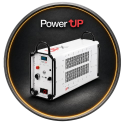
PowerUP
GENERATORS

Mobile hydrogen fuel cell generators for quiet, emission-free power in flexible applications.

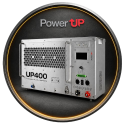
PowerUP
POWER SUPPLIES
Integrable fuel cell power supplies for compact, modular hydrogen-based energy systems.

PowerUP
ELECTROLYZER

Decentralized hydrogen production for resilient, independent energy supply on site.

PowerUP
USV SYSTEME

Hydrogen-based UPS power systems for reliable backup power in critical applications.

PowerUP
CONTAINER SYSTEME

Containerized hydrogen power systems, solutions for scalable, resilient energy supply on site.

LET'S TALK AND STAY IN TOUCH

YOUR CONTACT PERSONS

OUR BUSINESS AREAS

Vogt-CTE
Rescue
Business field for products related to rescue and operations

Vogt-CTE
Defense

Business field for products related to defense and security markets

Vogt-CTE
Energy

Business sector for products related to mobile energy supply markets

Vogt-CTE Fire Retardants
Business field for products related to fire protection and firefighting

LANGUAGE SETTINGS

FUEL CELL VS BATTERY EFFICIENCY & ENERGY LOSSES | VOGT CTE

Energy storage and energy converters such as fuel cell systems and batteries (e.g., lithium-ion) are subject to physical and chemical limitations. Losses occur not only in the core system itself but throughout the entire usage chain, depending on operating conditions, temperature, and storage duration.

Fuel cell systems exhibit their largest losses in the conversion chain and under partial load conditions, are sensitive to cold, and benefit from stable temperatures, but are very well suited for long storage periods. Batteries have a very high short-term efficiency, but lose performance at extreme temperatures and also age while at rest, making them less suitable for very long storage durations.

Losses in both technologies primarily occur due to conversion, temperature variations, and time – the longer, colder, hotter, or more dynamic the operation, the greater the energy losses.

FUEL CELL SYSTEMS (HYDROGEN)

In fuel cell systems, losses occur at several stages. Energetic losses arise from the production, compression, or storage of hydrogen. During the actual operation of the fuel cell, not all chemically stored energy is converted into electricity; a significant portion is released as waste heat. The efficiency is heavily dependent on the operating point: the cell operates more efficiently under constant, steady loads than during frequent load changes or partial load operation.

Temperature plays a crucial role. At low temperatures, performance decreases as reactions occur more slowly and water can freeze within the system. Additionally, energy is required for preheating. At high temperatures, although reaction conditions improve, material stress and aging increase, potentially leading to long-term efficiency losses.

With regard to storage time, hydrogen is very stable. It can be stored almost loss-free over long periods. Losses mainly stem from small leaks or the energy required to maintain pressure, rather than self-discharge.

BATTERIES (LITHIUM-ION)

Losses in batteries mainly occur due to electrical resistance and chemical side reactions. During charging and discharging, some of the energy is converted into heat, especially at high charging or discharging currents. The efficiency is generally high but decreases during rapid charging cycles or under high power demands.

Temperatures have a significant impact on batteries. At low temperatures, internal resistance increases, leading to a substantial drop in performance and charging capability. Part of the energy is then required to warm the battery. At high temperatures, performance may temporarily improve, but the chemical aging accelerates, potentially resulting in permanent capacity loss and increased safety risks.

The storage time affects batteries differently than hydrogen. Lithium-ion batteries undergo self-discharge and time-dependent aging, even when not in use. Over months or years, usable capacity decreases, particularly under high charge levels or unfavorable temperatures.

WHY BOTH TECHNOLOGIES ARE USED DESPITE THEIR SHORTCOMINGS—AND WHERE THEIR STRENGTHS LIE

Despite the described losses and limitations, fuel cell systems and lithium-ion batteries are extensively used because they possess different, complementary strengths. Neither technology is “better” overall – they are optimized for different tasks.

STRENGTHS OF FUEL CELL SYSTEMS (HYDROGEN)

Fuel cell systems are used because they can store energy for a very long time and provide it as needed. Their greatest advantage is the decoupling of generation and usage over extended periods. Hydrogen loses little energy over months, making this technology particularly valuable for seasonal storage, emergency power supply, and continuous energy delivery.

Another key advantage is the constant power delivery. Fuel cells provide a steady output for many hours or days without runtime being directly limited by the capacity of a battery. By simply refueling with hydrogen, the operating time can be extended without carrying large additional mass.

Additionally, fuel cells are well-suited for applications where waste heat can be effectively utilized, such as in stationary systems or industrial processes. In such cases, the overall efficiency significantly increases.

STRENGTHS OF LITHIUM-ION BATTERIES

Lithium-ion batteries are used because they are very efficient, fast, and compact. Their high efficiency during charging and discharging processes makes them ideal for applications where energy is frequently converted. They respond almost instantaneously to power demands and are therefore excellent for dynamic loads and rapid controls.

Another significant advantage is their high power density. Batteries can deliver or absorb a lot of power in a short time, making them ideal for vehicles, machinery, grid stabilization, and peak shaving. Additionally, they are technically easy to integrate, require no complex fuel logistics, and operate locally without emissions.

For short to medium storage times—ranging from seconds to several hours—lithium-ion batteries are energetically and economically very efficient.

CHECKLIST: WHEN TO CHOOSE A FUEL CELL, WHEN TO CHOOSE A LITHIUM-ION BATTERY?

Fuel cells (hydrogen) are sensible when:

  • Energy needs to be stored for days, weeks, or months
  • a long, continuous runtime is required
  • refueling instead of recharging is sensible
  • weight becomes critical for very long runtimes
  • waste heat can be utilized
  • supply security is more important than maximum efficiency
  • seasonal or off-grid applications are the focus


Lithium-ion batteries are sensible when:

  • High efficiency is critical
  • fast charging and discharging are required
  • frequent load changes occur
  • compact design and low system complexity are important
  • energy is only needed in the short to medium term
  • precise control and immediate power are required
  • mobility or grid stabilization is a priority

Fuel cells excel in long-term storage and continuous operation, while lithium-ion batteries perform well in efficiency, dynamism, and short-term storage. In modern energy systems, both technologies are increasingly combined to optimally utilize their respective strengths.


WE DELIVER INNOVATIVE ENERGY SYSTEMS
At Vogt-CTE, we provide our European trading partners access to unique innovations in the field of energy systems. Our solutions make energy supply and energy management easier, faster, safer, and more energy-efficient – all while consuming fewer resources. The products we represent are highly specialized, field-tested, and create real value: they strengthen resilient, decentralized structures and ensure operation even under demanding conditions. We do not just bring products to market; we deliver progress. Together with our partners, we ensure that these innovations reach where they are needed most: at operators of critical infrastructure, response organizations, and field users.