
Our solutions are designed to make energy supply and energy management more efficient, secure, and effective – even under challenging conditions. Thus, we support the management of current threat situations and create real value both in active field operations and at the interface with civilian deployments, such as protecting critical infrastructure and in crisis response.
EcoVolta – 2.3KW
POWERBANK
Universal, compact portable 230V solution for silent, emission-free energy on the go.
EcoVolta – 8.9KW
POWER TROLLEY
Mobile 400 Volt solution for professional applications with high power requirements.
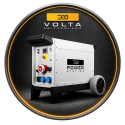
EcoVolta – 15.0KW
POWERSTATION
Scalable professional power supply for high inrush currents and long runtimes or multiple devices.
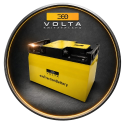
EcoVolta – 15.0KW
EVOTRACTION
Powerful battery blocks or traction batteries for electric vehicles and machinery
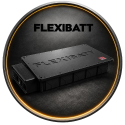
FlexiBatt – 2.5KW
BATTERY-BLOCK
With 2.5 kWh and a lightweight, compact design, FlexiBatt provides energy for extended field operations.
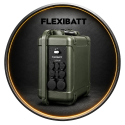
FlexiBatt – 2.5KW
BATTERY CASE
A modular 48V and 2.5 kWh ruggedized battery system for professional, off-grid use independent of the power grid.
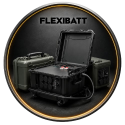
FlexiBatt – 50KW
BATTERY SYSTEM
A UPS and energy storage system with high capacity. The system combines 5 kWh modules. Scalable up to 50 kWh.
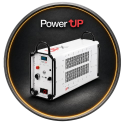
PowerUP
GENERATORS
Mobile hydrogen fuel cell generators for quiet, emission-free power in flexible applications.

PowerUP
POWER SUPPLIES
Integrable fuel cell power supplies for compact, modular hydrogen-based energy systems.

PowerUP
ELECTROLYZER
Decentralized hydrogen production for resilient, independent energy supply on site.
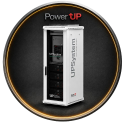
PowerUP
USV SYSTEME
Hydrogen-based UPS power systems for reliable backup power in critical applications.

PowerUP
CONTAINER SYSTEME
Containerized hydrogen power systems, solutions for scalable, resilient energy supply on site.












Vogt-CTE
Rescue
Business field for products related to rescue and operations
Vogt-CTE
Defense
Business field for products related to defense and security markets
Vogt-CTE
Energy
Business sector for products related to mobile energy supply markets
Vogt-CTE Fire Retardants
Business field for products related to fire protection and firefighting


In our regions, sun and wind do not always provide sufficient energy. Times of day, weather conditions, and seasons lead to renewable energy often being generated when it is not immediately needed – and conversely, it is lacking when demand is high. This is where the sustainability of a building is truly determined.
The key lies in energy storage. Only when excess energy from sunny or windy periods is stored can it be reliably available later – in the evening, at night, during calm winds, or during the winter months.

Energy storage is often viewed solely in terms of daily cycles, where electricity is generated during the day and used in the evening. However, in our regions, the real challenge lies much deeper. The central bottleneck is not the transition between day and night, but rather the structural difference between summer and winter.
During the summer months, photovoltaic and wind systems often produce more energy than can be immediately used or effectively utilized. In contrast, production significantly decreases in winter, while energy demand rises simultaneously. A truly sustainable energy supply must think beyond this and make energy available not just over hours, but over weeks and months. Only through this temporal decoupling of production and utilization can year-round supply security be ensured.
Modern energy systems therefore require a sensible combination of different storage approaches. Short-term storage is necessary to balance fluctuations throughout the day and cushion peak loads. In addition, long-term storage solutions are needed to bridge seasonal differences between summer and winter. PowerUP and FlexiBatt form the foundation for flexible, short-term storage and use of electrical energy. Hydrogen ideally complements this concept as a chemical long-term storage option capable of storing large amounts of energy over extended periods with minimal losses.
Particularly for seasonal balancing, hydrogen offers significant advantages. While electric battery storage is technically and economically optimal for periods of hours or a few days, it reaches its limits when it comes to monthly storage. In contrast, hydrogen enables the chemical storage of energy with very low self-discharge over long durations. Large energy quantities can thus be strategically shifted from summer to winter and can either be converted back to electrical energy or used directly as needed.
In this way, surplus energy from the summer months is not wasted, but conserved and made available precisely when it is urgently needed in winter. The interplay of short-term battery storage and long-term hydrogen storage thus creates the foundation for a robust, sustainable, and consistently balanced energy system.
SMEs with high winter energy requirements
Many small and medium-sized manufacturing companies generate large amounts of solar power during the summer months, while energy demand significantly increases in winter. Machines, processes, and heating systems require considerably more energy than can be generated in the short term. During the summer, surplus solar power is initially flexibly stored and also used for hydrogen production. In the cold season, this hydrogen is available for energy generation again, while PowerUP distributes and manages the generated energy within the operation. The benefit lies in a year-round predictable energy supply, a significantly reduced dependence on the public grid, and greater economic stability for the company.
Office Buildings and Business Parks
Office buildings and business parks often exhibit contrasting generation and consumption profiles. In summer, solar power generation often exceeds the immediate demand, whereas in winter, energy consumption for IT, lighting, and building services rises. During the sunny months, solar energy covers the daily needs, and surpluses are stored or converted into hydrogen. In winter, the stored energy can be utilized strategically to maintain reliable operations. This results in a sustainable year-round operation with reduced energy costs, even during low-sun phases.
Agricultural Enterprises
Agricultural enterprises often have large roof areas while experiencing strongly seasonal fluctuating load profiles. In the summer months, high solar yields occur that far exceed current demand. This energy is stored and converted into hydrogen to make it available for the long term. In winter, it is used for stable technology, cooling, or processing operations. The benefit consists of a substantial independence from seasonally fluctuating electricity prices and high supply security even during prolonged dark and bad weather periods.
Municipal Buildings and Infrastructure
Municipal facilities like schools, maintenance depots, or wastewater treatment plants have year-round energy needs, while local generation faces strong fluctuations. During periods of high generation, surpluses are stored long-term to be utilized later. In winter months, the stored energy significantly reduces the reliance on the public grid. This eases municipal budgets, lowers long-term costs, and creates high planning certainty for public entities.
Neighborhoods and Mixed-Use Areas
In modern neighborhoods, living, working, and mobility come together in close proximity. This creates complex load profiles with temporally offset energy needs. In summer, locally generated energy from photovoltaics is stored and preserved seasonally. In winter, this energy is used to supply buildings, community facilities, and charging infrastructure. The benefit lies in more stable local grids, higher self-supply, and future-proof neighborhood concepts designed for long-term sustainability.
Conclusion: Sustainability Requires Seasonal Storage
In our latitudes, sustainability is not determined by a single sunny day, but by the ability to reliably transfer excess summer energy into winter. PowerUP and FlexiBatt enable the intelligent use, storage, and distribution of electrical energy in daily operations. Hydrogen complements this system as a key technology for long-term energy storage. Thus, an energy system is created that not only operates efficiently but is also reliable, predictable, and future-oriented year-round.

A reliable energy supply begins with electricity generation and ends with its storage and use in accordance with demand. Especially at mobile, temporary, or remote locations, these two areas must be intelligently integrated. PowerUP and EcoVolta offer standalone, coordinated solutions for this purpose: PowerUP for decentralized energy production and EcoVolta for storage and the mobile delivery of electrical energy.
Decentralized Energy Production with PowerUP
PowerUP enables the production of electrical energy directly at the site of operation. The systems are particularly well-suited for locations where a stable grid connection is not available or where an independent energy supply is required. These include construction sites, farms, industrial sites, events, temporary workplaces, remote infrastructure, and private applications.
Decentralized energy production allows electricity to be generated exactly where it is needed. This reduces the need for long power lines, complex grid connections, and dependence on a centralized energy supply. PowerUP can also play a key role in safeguarding locations where power outages or grid fluctuations would lead to operational disruptions.
The locally produced energy can be used immediately to power electrical loads or stored for later use. This creates a flexible power supply concept that can be adapted to different operating conditions, consumption profiles, and power requirements.

Mobile Energy Storage with EcoVolta
EcoVolta complements decentralized energy production with high-performance battery systems and mobile power supply solutions. The energy generated can be stored and made available exactly when it is needed. This allows production and consumption to be decoupled in terms of timing.
In industry, EcoVolta’s solutions can be used to power machines, tools, pumps, measurement systems, lighting, communication equipment, and temporary workstations. The stored energy can also help mitigate peak loads, power outages, or fluctuating power demands.
In the skilled trades, mobile battery systems enable a flexible power supply on construction sites, during installation work, or at hard-to-reach locations. Power tools and equipment can be operated independently of a fixed power connection. Depending on the system, high-performance connections such as 400-V three-phase power are also available, allowing demanding commercial loads to be powered on the go.
EcoVolta’s solutions also offer versatile applications in the residential sector. For example, they can be used for work around the house and garden, for recreational activities, in remote buildings, or as a backup during a power outage. Their quiet and locally emission-free operation makes them an attractive alternative to conventional generators.
The combination of PowerUP and EcoVolta creates a holistic approach: energy is produced decentralized, stored securely, and made available as needed for mobile or stationary applications. This enables the implementation of independent, flexible, and sustainable power supply concepts for industry, trade, and private users.
Hydrogen is especially suitable as a long-term storage solution for energy because it can store large amounts of energy nearly loss-free over very long periods. Unlike electric battery storage, which is mainly designed for hours or a few days, hydrogen is ideal for weeks and months. Energy is chemically bound in this process, resulting in minimal self-discharge and making seasonal storage economically viable. Surplus energy from windy or sunny periods does not go to waste but is available exactly when demand increases. Thus, hydrogen is a central component in transferring energy from summer to winter and ensuring a stable, sustainable supply throughout the year.
WE DELIVER INNOVATIVE ENERGY SYSTEMS
At Vogt-CTE, we provide our European trading partners access to unique innovations in the field of energy systems. Our solutions make energy supply and energy management easier, faster, safer, and more energy-efficient – all while consuming fewer resources. The products we represent are highly specialized, field-tested, and create real value: they strengthen resilient, decentralized structures and ensure operation even under demanding conditions. We do not just bring products to market; we deliver progress. Together with our partners, we ensure that these innovations reach where they are needed most: at operators of critical infrastructure, response organizations, and field users.